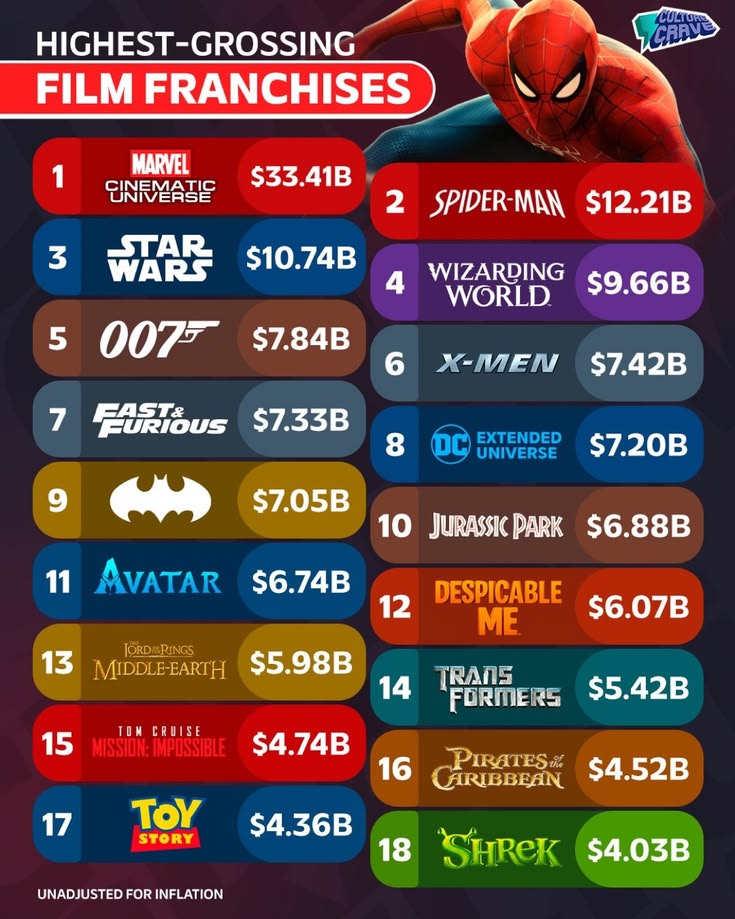
Hollywood has always been known for producing unforgettable movies, but over the years, one trend has become increasingly difficult to ignore: movie franchises are dominating the entertainment industry.
From superhero adventures and fantasy sagas to action-packed spy films, audiences have become familiar with stories that continue across multiple movies. Instead of watching a character’s journey unfold in a single film, viewers can now follow that character for years, sometimes across an entire cinematic universe.
Franchises such as Marvel Cinematic Universe, Fast & Furious, Jurassic Park, Harry Potter, and Mission: Impossible have helped shape modern Hollywood. They have created memorable characters, generated enormous fan communities, and changed how studios approach filmmaking.
But how did movie franchises become so powerful, and what does their popularity mean for the future of cinema?
Let’s take a closer look.
1. The Rise of Movie Franchises
Movie franchises are not a completely new idea. Hollywood has produced sequels and recurring characters for decades. However, franchises have become more ambitious and commercially important in recent years.
Earlier films often told complete stories, with sequels introduced when the original movie performed well. Today, some studios plan entire series before the first installment reaches theaters.
This approach allows filmmakers to build larger stories, introduce supporting characters, and leave questions unanswered until the next movie.
The Star Wars franchise, for example, demonstrated how a fictional universe could grow beyond one successful film. Over time, it expanded through sequels, prequels, spin-offs, television productions, books, games, and merchandise.
This strategy has helped studios turn successful movies into long-term entertainment brands.
2. Superhero Movies Changed the Game
Superhero films have played a major role in the modern franchise era.
The Marvel Cinematic Universe connected individual superhero stories into a larger narrative. Characters appeared in their own films before joining forces in crossover events.
Movies such as The Avengers, Avengers: Infinity War, and Avengers: Endgame demonstrated the commercial appeal of bringing multiple characters together.
For fans, the experience became more than simply watching individual movies. Each new release could contain references, returning characters, and clues about future stories.
Other studios attempted similar strategies, hoping to create interconnected cinematic universes of their own.
However, not every attempt succeeded. Building a successful franchise requires more than introducing recognizable characters. Audiences must care about the stories, relationships, and conflicts connecting them.
3. Why Studios Love Franchises
One major reason studios invest heavily in franchises is financial predictability.
A film featuring a familiar character may attract audiences who already know and love that character. Existing fan communities can also help generate publicity through discussions, trailers, online reactions, and fan theories.
Successful franchises create additional business opportunities through merchandise, streaming deals, video games, theme parks, and licensing agreements.
For example, a popular fantasy franchise might sell toys, clothing, collectible items, and books alongside its movie releases.
This business model can make a successful franchise valuable for many years.
However, familiarity does not guarantee success. Audiences can become tired of repetitive stories, disappointing sequels, or excessive releases. Studios still need to deliver quality entertainment if they want viewers to remain interested.
4. Sequels Can Be Brilliant—or Disappointing
One of the biggest advantages of a franchise is the opportunity to develop characters over time.
A sequel can explore a hero’s weaknesses, introduce more complicated villains, or reveal consequences that the original movie could not fully examine.
Some sequels even become more popular than the films that introduced their characters. The Dark Knight, for example, is widely praised for its performances, storytelling, and exploration of morality.
On the other hand, some sequels struggle because they repeat the original film’s formula without adding anything meaningful.
A bigger budget, more explosions, and additional characters cannot automatically make a movie better.
The most successful sequels understand what audiences loved about the original while introducing something fresh.
5. The Problem of Franchise Fatigue
As franchises expand, they face a difficult challenge: keeping audiences interested.
When viewers feel that they must watch numerous films or television series to understand one story, entertainment can begin to feel like homework.
This is particularly challenging for interconnected cinematic universes. A person who wants to watch one new movie may feel pressured to catch up on several earlier releases.
Another problem occurs when studios release too many installments without allowing enough time for audiences to miss the characters.
Franchise fatigue does not mean people have stopped enjoying familiar stories. Instead, it suggests that audiences want a reason to return.
Fresh ideas, memorable performances, strong writing, and meaningful character development remain essential.
6. Original Movies Are Facing Tough Competition
The popularity of franchises has raised concerns about opportunities for original films.
When a studio has the option to invest in a well-known property or an unfamiliar story, the established franchise may appear to be the safer financial decision.
As a result, original films sometimes struggle to receive the same marketing budgets or theatrical attention as major franchise releases.
This can be disappointing for viewers who want fresh characters, unexpected plots, and stories that do not require knowledge of previous installments.
Nevertheless, original movies continue to find success. Films with distinctive ideas and strong word-of-mouth can attract audiences even without an existing fan base.
Franchises and original films do not have to compete as if only one can survive. A healthy movie industry benefits from both familiar worlds and completely new ideas.
7. Streaming Has Expanded Franchise Storytelling
Streaming services have given studios additional ways to develop their fictional worlds.
Instead of explaining every detail in a two-hour film, a franchise can use television series to explore supporting characters, introduce new storylines, or fill gaps between major releases.
This approach can give audiences a deeper understanding of a fictional universe.
However, expanding a franchise across several platforms can also make it harder to follow. Viewers may become frustrated when important information is spread across films and television shows.
The challenge for studios is to make additional stories enjoyable on their own while allowing dedicated fans to appreciate the larger connections.
8. Fans Have More Influence Than Ever
Social media has changed the relationship between movie studios and audiences.
Fans can share reactions to trailers, debate casting decisions, criticize storylines, and campaign for characters they want to see again.
These conversations can help generate excitement long before a movie reaches theaters.
However, online popularity does not always translate into ticket sales. A trailer may attract millions of views without convincing people to purchase tickets.
Fan expectations can also become difficult to satisfy, especially when audiences have different ideas about how a beloved character should be portrayed.
Ultimately, filmmakers must balance respect for established fans with the creative freedom needed to tell compelling stories.
9. What the Future Holds for Movie Franchises
Movie franchises are unlikely to disappear, but their strategies may continue to change.
Studios may become more selective about which properties receive sequels, while placing greater emphasis on strong scripts, distinctive directors, and meaningful character development.
Some franchises may expand through streaming, while others may focus on occasional theatrical events that make audiences excited to return to cinemas.
There is also room for smaller-scale stories within established universes. Not every installment needs to be larger, louder, or more expensive than the previous one.
Sometimes, a well-written story with emotional depth can be more memorable than an enormous battle involving dozens of characters.
The future of franchises will depend on whether studios can keep their worlds interesting without exhausting audience enthusiasm.
Final Thoughts
Movie franchises have transformed Hollywood by changing how studios finance films, develop characters, market releases, and connect with audiences.
They offer viewers the pleasure of returning to familiar worlds while creating opportunities for stories that unfold over many years.
However, their success also comes with challenges. Repetitive sequels, excessive releases, and a lack of original ideas can weaken even the most popular entertainment brands.
The strongest franchises understand that audiences do not return simply because a movie has a familiar name. They return because they want to experience something exciting, emotional, surprising, or meaningful.
Hollywood’s future will not depend on abandoning franchises altogether. It will depend on telling better stories within them while continuing to give original movies the opportunity to succeed.
After all, the next unforgettable cinematic experience might come from a familiar superhero—or from a completely new character nobody has met before.
Leave a Reply